Platforms
Workato

Automation and integration across systems
Delivered to run in production.

Workato is powerful when it's not just "recipes," but a governed integration and automation layer your teams can trust. IKC helps you design, build, and scale Workato with operability, security, and long-term maintainability built in.

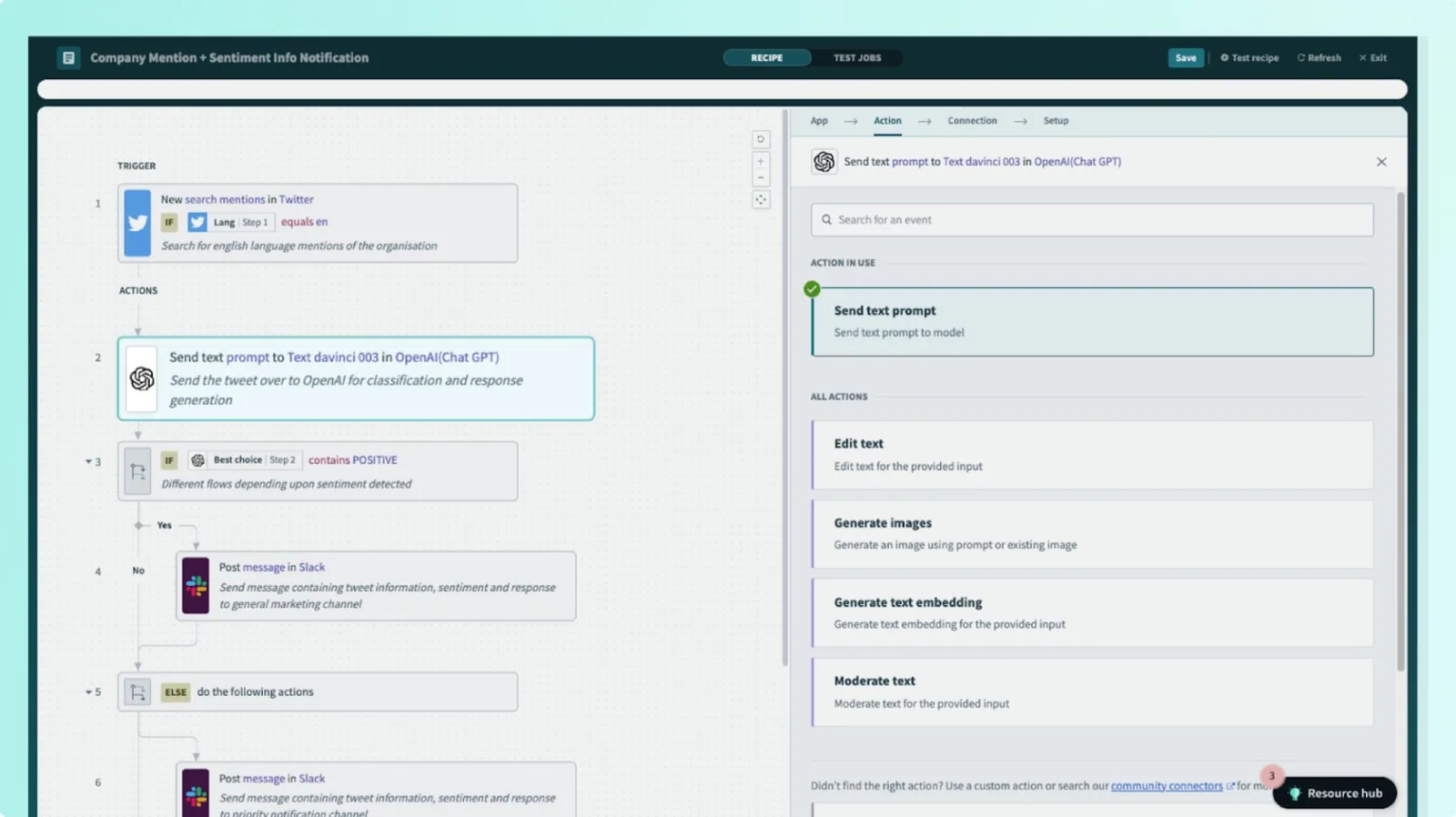
Deliver cross-system workflows with reliable integration patterns
Build for real operations with monitoring, reprocessing, and change control
Scale safely with governance, standards, and reusable building blocks
When Workato is the right platform

Rapid system connectivity

You need to connect many SaaS and business systems quickly and reliably

No-code workflow automation

Teams want to automate workflows without building custom code for everything

Secure and auditable

You need secure integrations with clear ownership and auditability

Scalable integration patterns

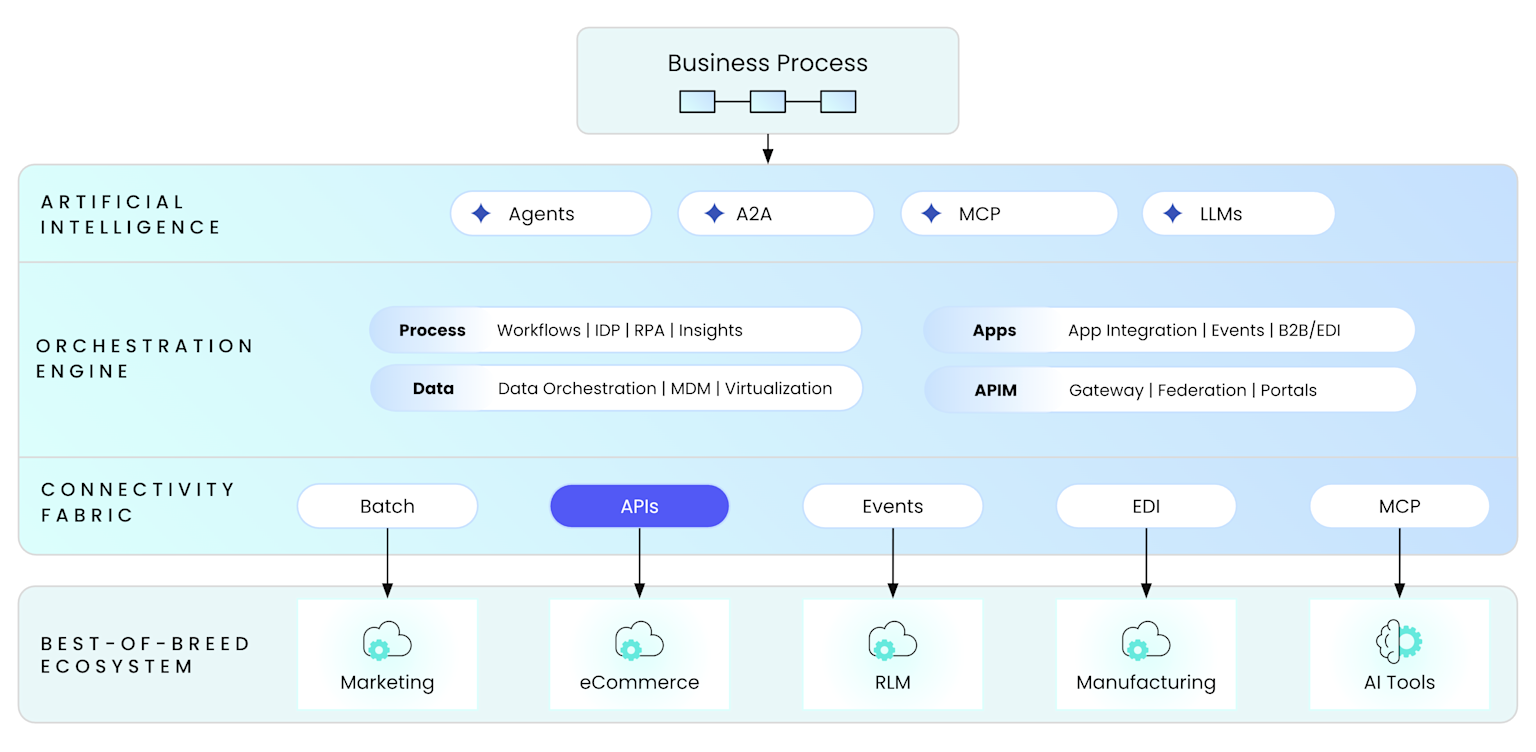
You want to standardise integration patterns as your tool landscape grows

IT and business alignment

You need a platform that can support both IT and business teams—without chaos

From quick wins
to a scalable automation layer

System-to-System Integration

Connect SaaS, business apps, and internal systems with stable patterns (API/event/batch as appropriate)

Workflow Automation

Orchestrate approvals, handoffs, and fulfillment across tools—end-to-end

Data Synchronisation & Quality

Define sources of truth, mapping, validation, and exception queues

Operational Design

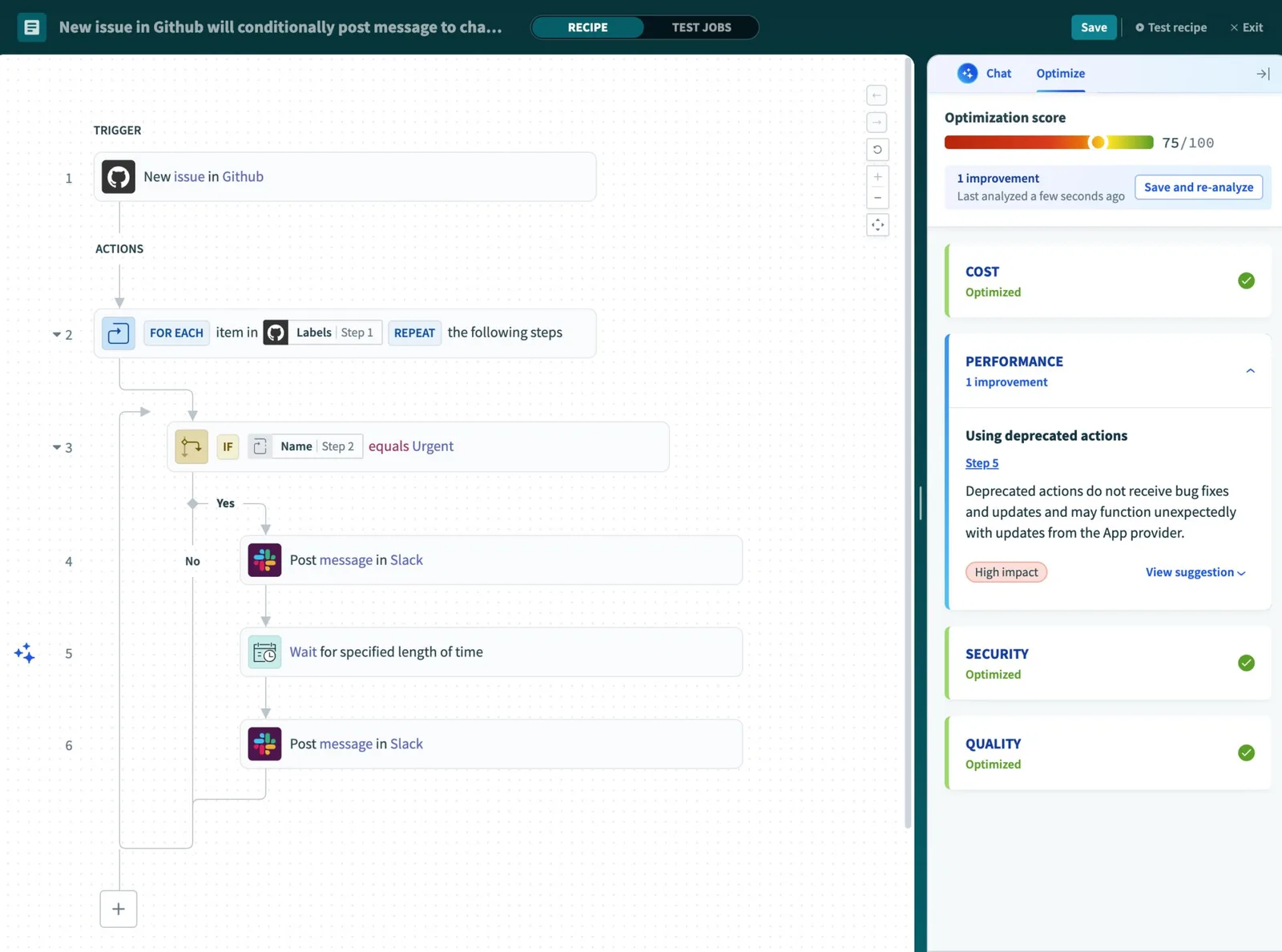
Monitoring, alerting, error handling, reprocessing, and runbooks for day-2 operations

Governance & Standards

Naming, versioning, access control, shared libraries/reusable components, and review practices

Enablement

Train admins and builders, and establish a Center of Excellence (CoE)-style operating model where needed

Fast delivery
without creating long-term fragility

01

Discover & Prioritise

  • Identify high-impact use cases and integration dependencies
  • Define success criteria and an implementation backlog
02

Design for Reliability

  • Choose patterns (real-time/event/batch), define data mapping and validation
  • Design for idempotency, retries, dedupe, and rate-limit handling
  • Align security requirements (auth, secrets, least privilege)
03

Build & Test

  • Implement recipes/integrations with reusable components where possible
  • Test normal + exception scenarios (timeouts, partial failures, duplicates)
04

Operate & Govern

  • Set up monitoring and operational runbooks (triage, reprocessing, escalation)
  • Implement change control, versioning, and review practices
05

Scale & Improve

  • Expand to more systems and teams using standards and governance
  • Improve continuously based on errors, usage patterns, and business feedback

Practical outcomes
Built on governance and operability

Faster delivery

of cross-system automation without constant custom development

Fewer manual handoffs

and less re-entry across tools

Better reliability

through clear monitoring, reprocessing, and ownership

Scalable integration layer

that supports future expansion and AI-assisted operations

Common Use Cases on Workato

01

SaaS-to-SaaS integrations

CRM ↔ marketing ↔ finance ↔ support

02

Employee lifecycle flows

(joiner/mover/leaver) across HR, IAM, and IT systems

03

Automated approvals and handoffs

across collaboration tools and line-of-business apps

04

Data sync and reconciliation

between systems of record

05

Triggering operational actions

based on signals (events, updates, thresholds)

Frequently Asked Questions (FAQ)

A. This happens when speed is prioritised without governance. Workato can scale well, but it needs standards: reusable building blocks, ownership, versioning, and reviews. We put a governance model in place so integrations remain understandable, maintainable, and safe as complexity grows. You gain speed without sacrificing clarity.

A. The difference between built and operable is day-two readiness. Operable integration includes monitoring, alerting, runbooks, reprocessing procedures, and change control so failures are handled consistently. We treat these as core deliverables because they keep operations stable long after the project team has moved on.

A. Yes, with a clear model. Citizen builders can create strong value when boundaries are defined: what is safe to build, what requires IT oversight, and what patterns must be followed. We help define those boundaries and governance so business-led automation accelerates value without creating hidden operational risk.

Explore More

Related Solutions

Automation

Streamline workflows efficiently

Integration

Connect systems seamlessly

AI-based Operations

Intelligent automation

Other Platforms

ServiceNow

ServiceNow

Enterprise workflow platform

OutSystems

OutSystems

Low-code development

Halo

Halo

Practical ITSM solution

Get in touch

Tell us about your project and how we can help